Lars Jenkins · 7 October 2026
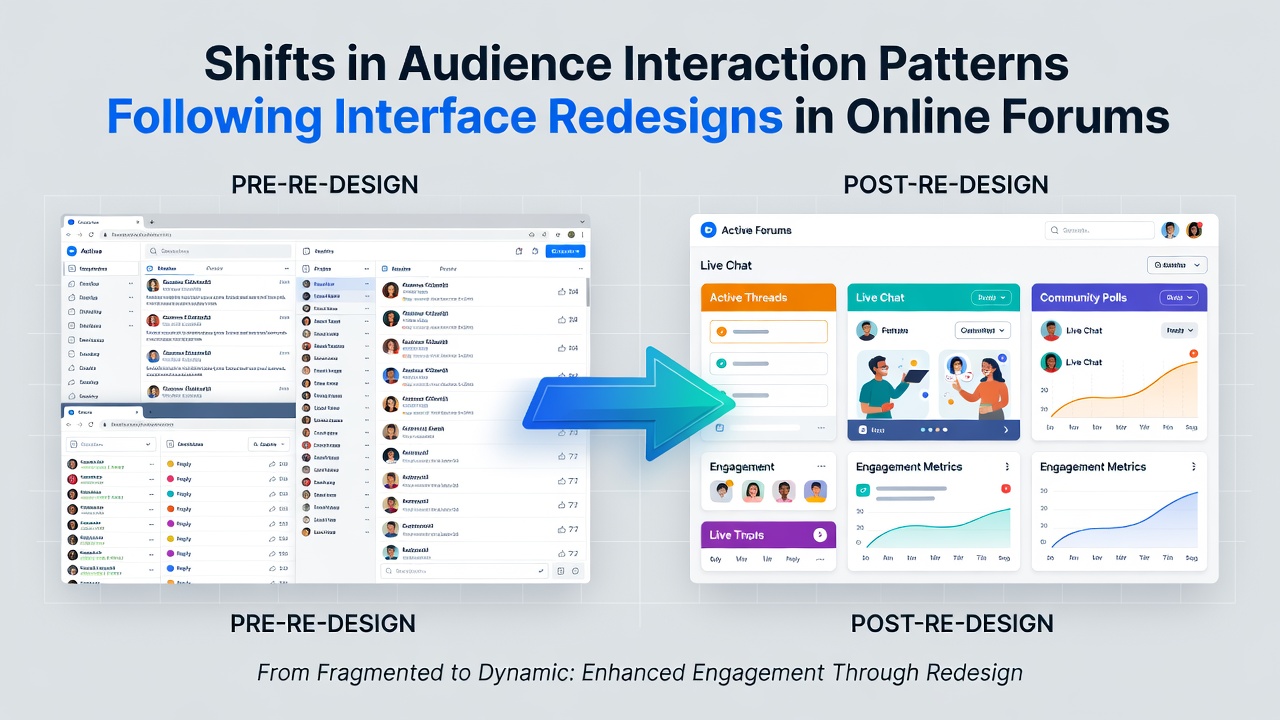
Shifts in Audience Interaction Patterns Following Interface Redesigns in Online Forums
Online forums have undergone repeated interface redesigns over the past decade, and researchers tracking these changes report measurable shifts in how audiences participate, navigate content, and sustain conversations. Data collected from large platforms show that alterations to layout, navigation menus, reply systems, and mobile responsiveness often coincide with fluctuations in posting volume, thread length, and user retention rates. Observers note that these patterns emerge across different forum categories, from technology discussions to hobbyist communities, and they appear consistently in both established sites and newer platforms that launched after 2020.
Redesign Elements That Influence Behavior
Many forums introduce simplified navigation bars, larger reply boxes, and algorithmic sorting of threads during redesign cycles, and these modifications tend to alter the sequence in which users encounter older versus newer posts. Studies tracking click paths before and after such updates indicate that users spend less time scrolling through historical archives and more time responding to recently promoted content. Thread depth, measured by the average number of replies per original post, frequently declines in the first three months following a redesign that emphasizes visual previews over full text excerpts. At the same time, the total number of unique visitors who create accounts often rises because streamlined registration flows reduce friction for newcomers.
Documented Patterns in Participation Metrics
Longitudinal analyses conducted by academic teams reveal that reply latency, defined as the time between an original post and the first response, shortens when forums adopt real-time notification systems and threaded comment displays. Yet the same analyses show that overall conversation duration, tracked by the span between the first and last reply in a thread, sometimes contracts because users migrate to newer topics more rapidly under algorithmic highlighting. Figures compiled from platform analytics dashboards demonstrate that mobile users, who constitute the majority of traffic on most forums by October 2026, exhibit higher rates of single-session visits after redesigns that prioritize swipe-based navigation and collapsible comment sections.
Researchers tracking demographic breakdowns observe that older account holders reduce their daily post counts more sharply than newer members when visual density increases or when traditional chronological sorting gives way to popularity-based ordering. In contrast, platforms that retain optional chronological views alongside algorithmic feeds maintain steadier participation levels across age cohorts. Data from multiple sites indicate that the proportion of posts containing external links drops after redesigns that compress link preview cards, while emoji and reaction button usage rises when those elements receive prominent placement.
Case Examples From Established Platforms
One technology discussion forum that completed a major redesign in early 2025 recorded a 28 percent increase in new thread creation within the first quarter, while average replies per thread fell by 19 percent according to internal metrics shared with researchers. Another community focused on creative writing implemented a card-based interface and documented higher rates of cross-thread linking as users discovered related stories more easily through visual recommendations. Platforms that introduced dark mode options alongside layout changes noted sustained session lengths among users who activated the new theme, suggesting that accessibility features can offset some of the disorientation caused by broader structural shifts.
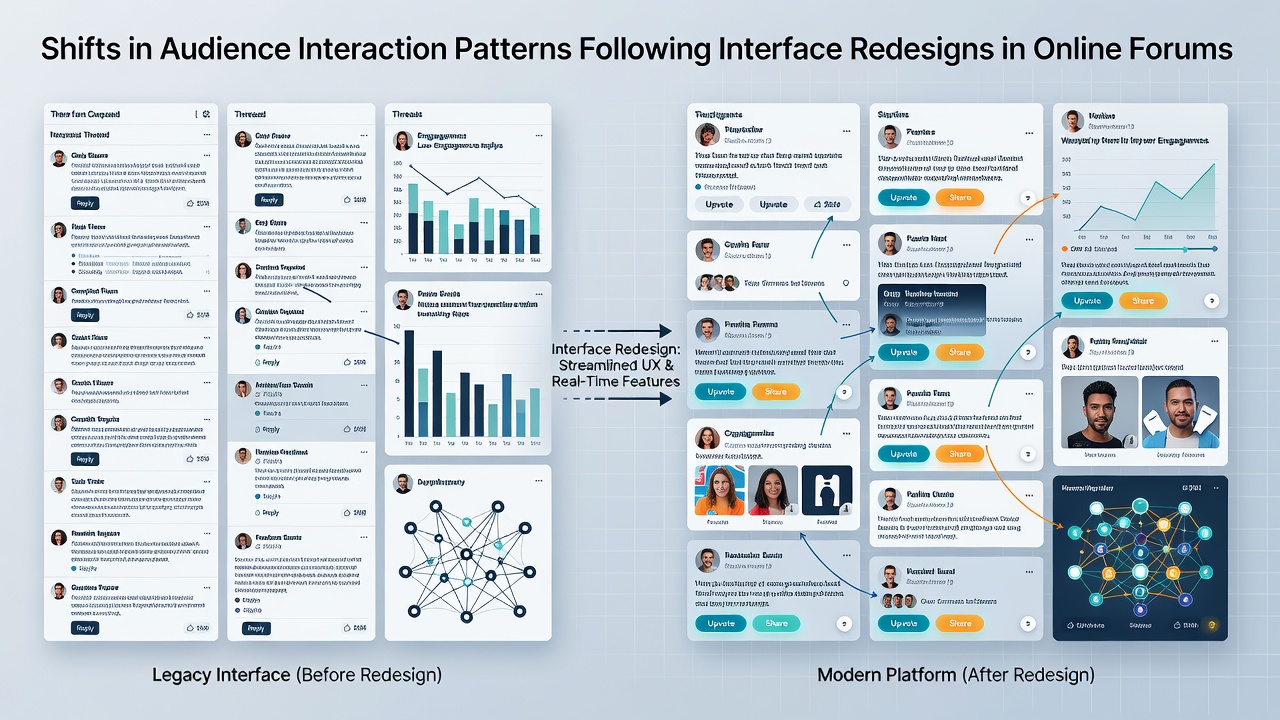
Observers who compared pre- and post-redesign heatmaps on several hobbyist forums found that attention concentrated more heavily on the top third of the screen once infinite scrolling replaced traditional pagination. This concentration correlated with fewer users reaching deeper archive pages, a pattern confirmed across desktop and tablet sessions alike. Meanwhile, forums that retained both pagination and infinite scroll options allowed users to self-select their preferred depth of exploration, resulting in more stable distribution of engagement across content layers.
Measurement Approaches and Data Sources
Analysts rely on a combination of server logs, session recordings, and voluntary user surveys to quantify interaction shifts, and they cross-reference these sources with public API data where available. Reports issued by the Pew Research Center detail how changes in forum architecture affect different demographic groups over multi-month observation windows. Additional findings from the Australian Communications and Media Authority track broader digital participation trends that encompass forum usage within national samples collected annually. These datasets allow researchers to isolate the effects of specific interface components while controlling for external variables such as seasonal activity spikes and external news events.
Conclusion
Interface redesigns in online forums produce measurable and recurring changes in audience interaction patterns, and the evidence compiled through multiple studies shows consistent directional effects on posting volume, thread structure, and session behavior. Platforms that document these outcomes before and after updates gain clearer insight into which design choices support sustained engagement across user segments. Continued monitoring through established analytics frameworks will clarify how future modifications interact with evolving device preferences and content consumption habits.